
CORE COMPONENTS
This System is a comprehensive IoE ecosystem leveraging affordable, scalable IT components
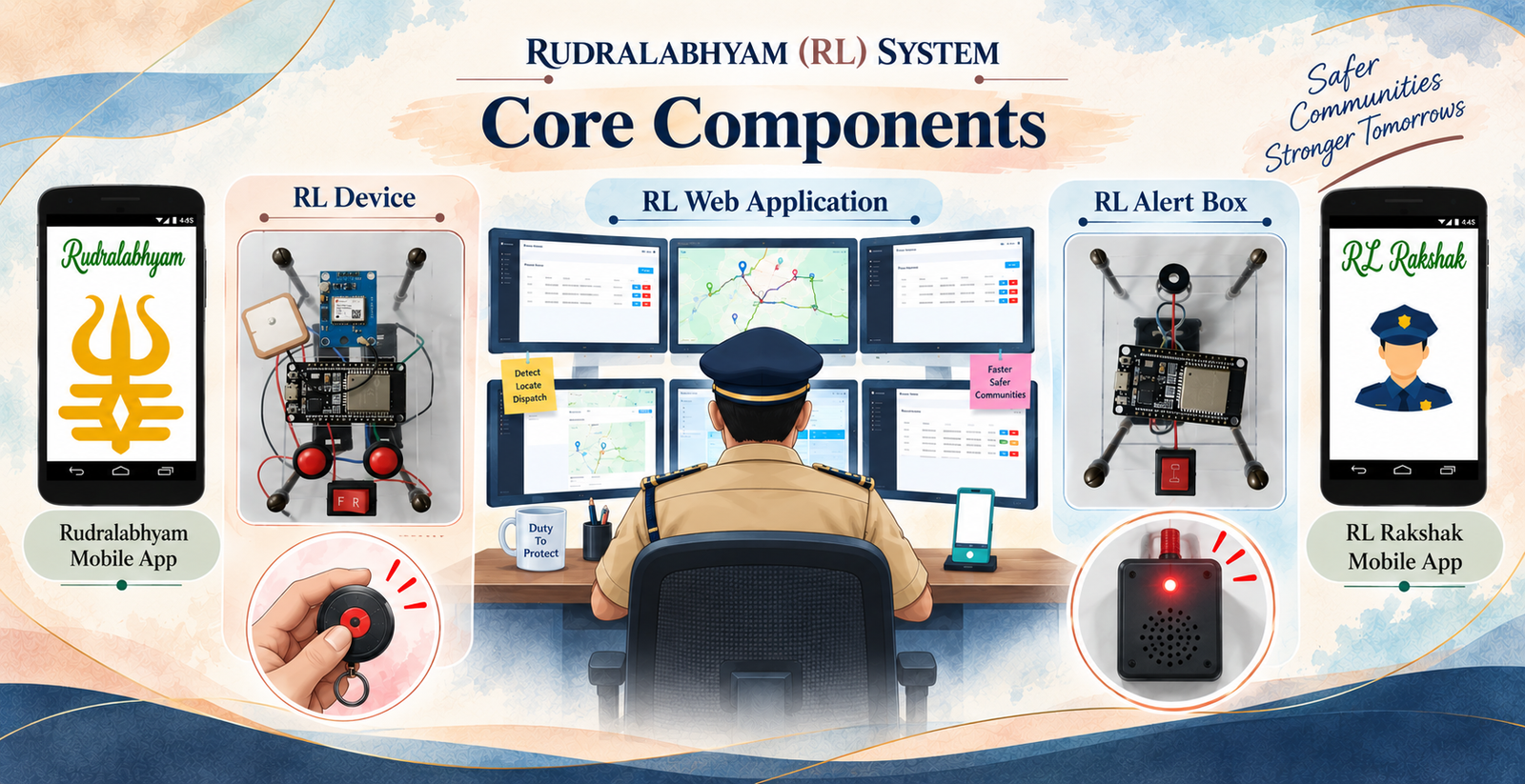
i) RL Device: This is a compact, police-issued, location tracker, made using an ESP32 microcontroller and a Neo-M8N GNSS Module. It has a panic button to begin transmitting location data of the user to the RL Web Application.
It is important to note that the RL Device is not a commercial device to be available on the open market, but an administrative tool. A woman becomes eligible to receive the device only after submitting a formal application about the perceived threat. It is upto the local police administration to evaluate the risk and issue the RL Device.
ii) RL Web Application: This application is the brain of the system. It was developed in PHP language. After getting the location information and the ID from the RL Device, it identifies the nearest police station and activates that police station’s RL Alert Box to make an alarm sound. After getting alerted by the RL Alert Box, a police official opens the rescue management window of this application, and assigns a police personnel (RL Rakshak) to rescue the victim. The RL Web Application was designed so that the RL Alert Box keeps making alert sound until an RL Rakshak is assigned. The local police administration and district administration can monitor the rescue operation in real time through this application. It has different user levels: local and the district police administrations. The local police administration can register RL Users (victims), enroll new RL Devices, add RL Rakshaks to the portal, and manage rescue operations. The district level administration can add police stations and monitor ongoing and past rescue operations.
After getting alerted by the RL Alert Box, a police official opens the rescue management window of this application, and assigns a police personnel (RL Rakshak) to rescue the victim. The RL Web Application was designed so that the RL Alert Box keeps making alert sound until an RL Rakshak is assigned. The local police administration and district administration can monitor the rescue operation in real time through this application.
It has different user levels: local and the district police administrations. The local police administration can register RL Users (victims), enroll new RL Devices, add RL Rakshaks to the portal, and manage rescue operations. The district level administration can add police stations and monitor ongoing and past rescue operations.
iii) The RL Alert Box: This is an alarm placed inside each police station, made using an ESP32 microcontroller and a buzzer. Whenever an emergency is determined by the RL Web Application to be under a police station, that police station’s RL Alert Box makes an alarm sound until an RL Rakshak is assigned.
iv) The RL Rakshak App: This is a mobile app used by assigned rescue officers (RL Rakshaks). It was developed using MIT App Inventor. It shares the live geolocation of the RL Rakshak during a security operation and mirrors the rescue management window from the RL Web Application, showing the location of the victim so they can easily rescue them. Based on the data sent by this app, the RL Web Application can easily show the live location of the RL Rakshak.
v) Rudralabhyam App: This is a mobile app used by victims. It was developed using MIT App Inventor. When a woman receives the RL Device from the police administration, the authority creates an RL User Account. The victim can update her profile through this app, and provide various kinds of information. In particular, she can specify phone numbers to reach out during emergencies, and save details regarding emergency information, which will assist the police during investigations.
RL Device
A quiet guardian designed to turn a woman's warning into an actionable signal
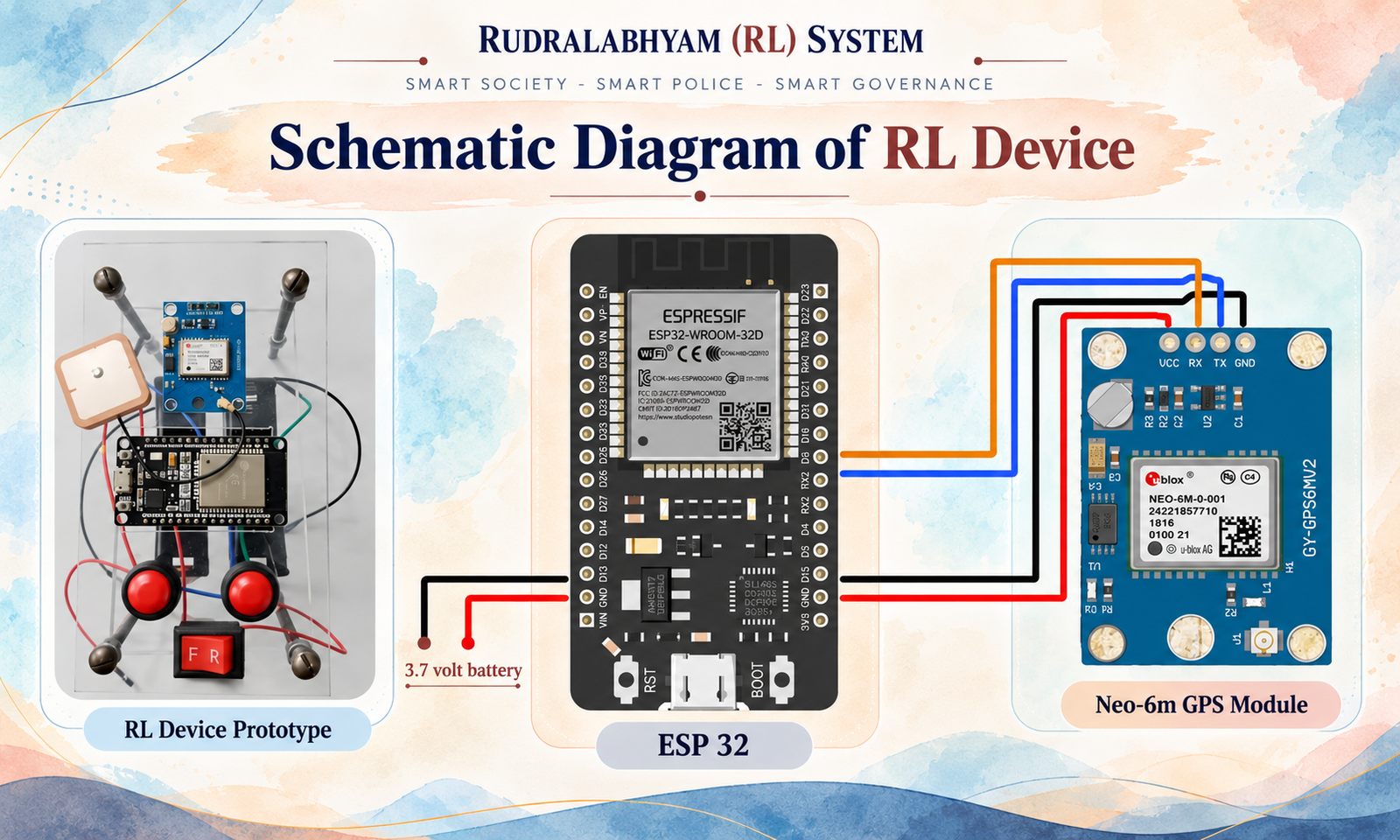
The RL Device is the personal emergency-signal component of the Rudralabhyam System. It is designed to remain discreet and portable so that a woman who has already reported a perceived threat to the police can carry it without repeatedly unlocking a phone, opening an application or navigating a digital interface during a moment of danger.
At its core, the prototype combines a compact microcontroller-based control system with GNSS-based location capability and a dedicated SOS interface. Its purpose is not to replace ordinary emergency services, but to create a direct communication layer between a registered RL User and the police administration responsible for her area.
When the registered user presses the SOS button, the device transmits the user's identification and location information to the RL Web Application. The documented prototype is capable of transmitting the location within approximately ten seconds, after which the web application begins the station-level response process.
Most importantly, the RL Device is not a commercially available consumer product. It is issued by the police only after the local police administration has been informed of a perceived threat, harassment or imminent risk and has assessed the need for the protective arrangement.
Prototype cost: An RL Device costs ₹1050:
- ESP32 - ₹350,
- Neo-M8N GNSS Module - ₹650,
- Power Supply - ₹50
The present prototype is larger than a future professionally manufactured version. If it is developed for full commercial manufacture, the RL Device could be made considerably smaller, more refined, and cheaper while retaining the same operational purpose.
RL Alert Box
The sound of urgency inside the station, where every second can move a response forward
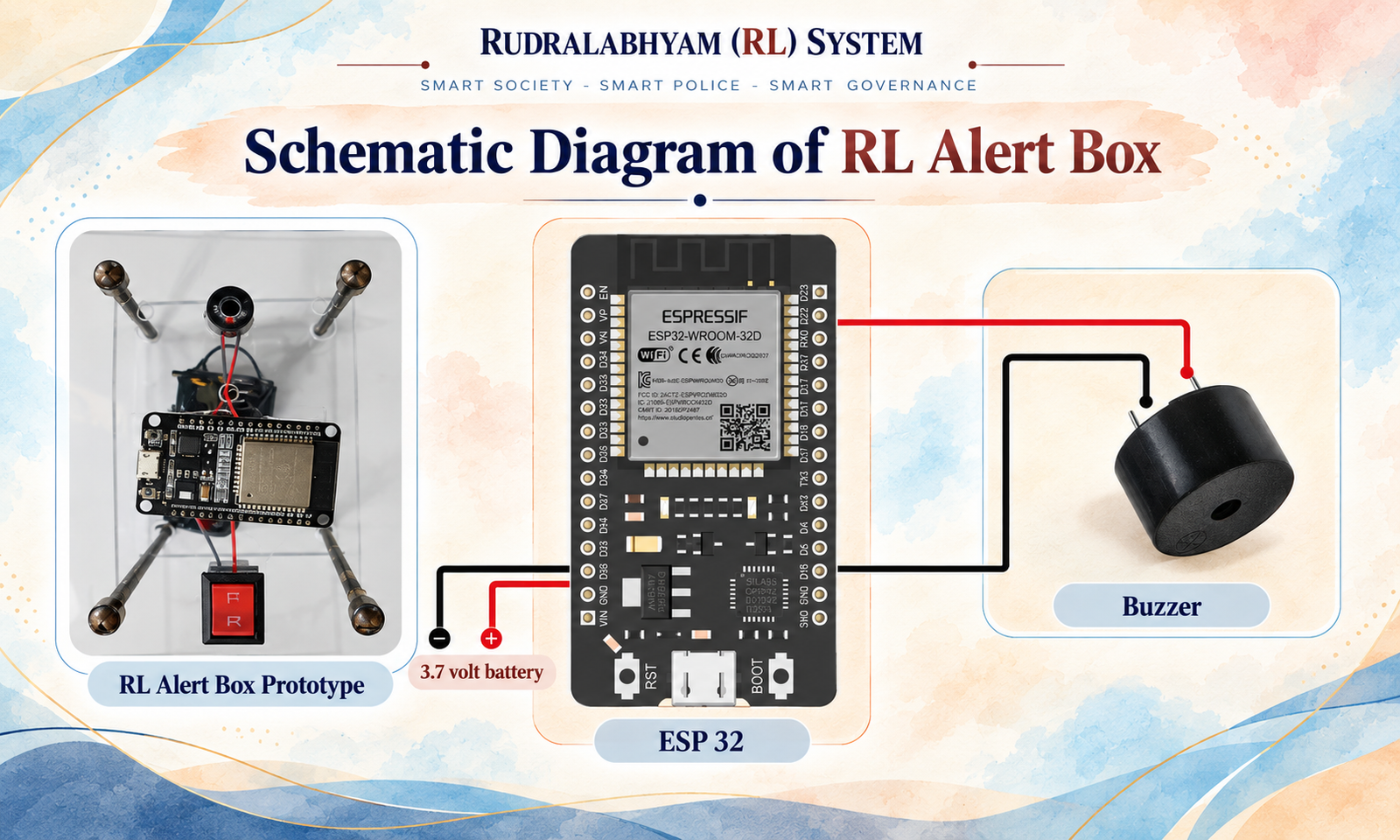
The RL Alert Box is the station-level alert component of the Rudralabhyam System. While the RL Device remains with the registered user, the RL Alert Box remains inside the designated police station. Its role is straightforward: when the RL Web Application identifies an emergency belonging to that station, the system triggers a physical alarm inside the Police Station.
This creates an important bridge between digital information and human action. An emergency signal is not merely displayed somewhere inside a computer system; it produces an alert in the environment where police personnel are present.
The prototype Alert Box uses an ESP32-based control arrangement and a buzzer to generate the station alert. Its design focuses on reliability and immediacy rather than unnecessary complexity. The station-level alarm remains active until a police official acknowledges the emergency and assigns an RL Rakshak through the rescue-management window.
Prototype cost: An RL Alert Box costs ₹405:
- ESP32 - ₹350,
- Buzzer - ₹5,
- Power Supply - ₹50
RL Web Application
Where a silent signal becomes a visible, accountable rescue operation
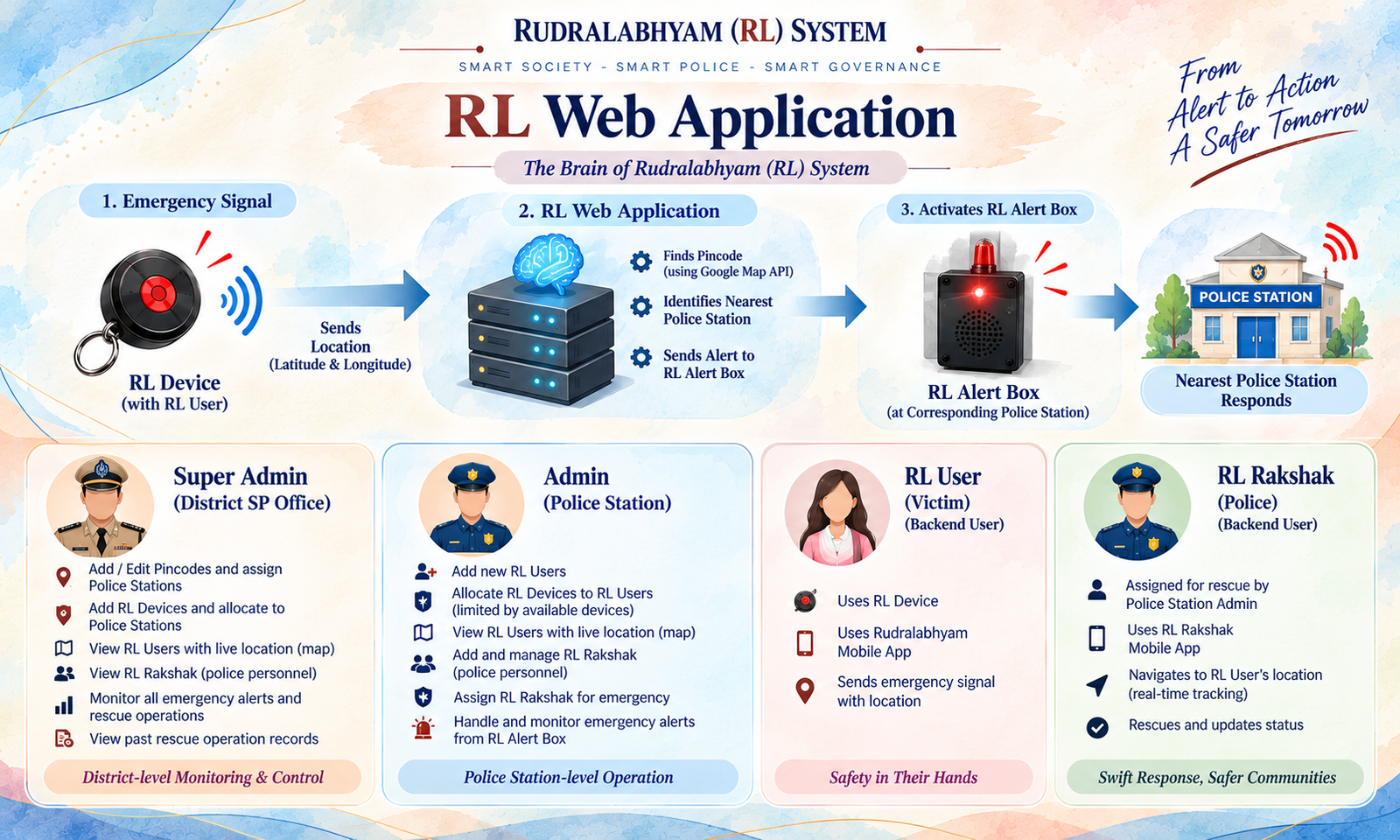
The RL Web Application is the central intelligence and rescue-management platform of the Rudralabhyam System. It connects the information received from the RL Device with the police station and the personnel responsible for the rescue operation.
When an emergency signal is received, the application processes the user's location information and identifies the police station associated with the incident. It then activates the station's RL Alert Box, ensuring that the digital emergency signal reaches the physical environment of the responsible police station.
Once the station alert is received, police personnel can open the rescue-management window. The window provides the operational interface through which an officer can acknowledge the emergency and assign an RL Rakshak to respond.
A particularly important feature is the relationship between the alert and assignment process. The RL Alert Box alarm is designed to remain active until an RL Rakshak has been assigned. This helps prevent an emergency signal from becoming merely another unattended notification.
During the rescue operation, the web application can display the real-time locations of the victim and the responding RL Rakshak. This gives the police administration a live operational picture rather than requiring the response to depend entirely on voice communication.
The web application also has multiple user levels. There are two main types of users:
- Super Admin (District SP Office)
- Admin (Police Station)
- Add Police Stations against pincodes.
- Add RL Device and allocate a device to police stations.
- View RL User with their address map.
- View RL Rakshaks
- Monitor ongoing emergencies
- Add new RL User.
- Allocate RL Device for a particular RL User.
- View RL User with their address map.
- Add and view RL Rakshak. Admin assign RL Rakshak for Emergency.
- View all the RL Users with their current locations who are in danger. Super Admin and Admin are the front end users of the system. There are two more users – first one is RL User (victim) and second one is RL Rakshak (police).
Development cost: The RL Web Application was developed using open-source PHP, with zero development cost. The principal recurring software expense is server maintenance and hosting, estimated in the documentation at approximately ₹2,000–₹5,000 annually for the current setup. A larger district-wide or statewide deployment would require stronger cloud infrastructure and greater server capacity.
Rudralabhyam and RL Rakshak Mobile App
Two mobile interfaces, one shared purpose: keeping the right people connected when it matters
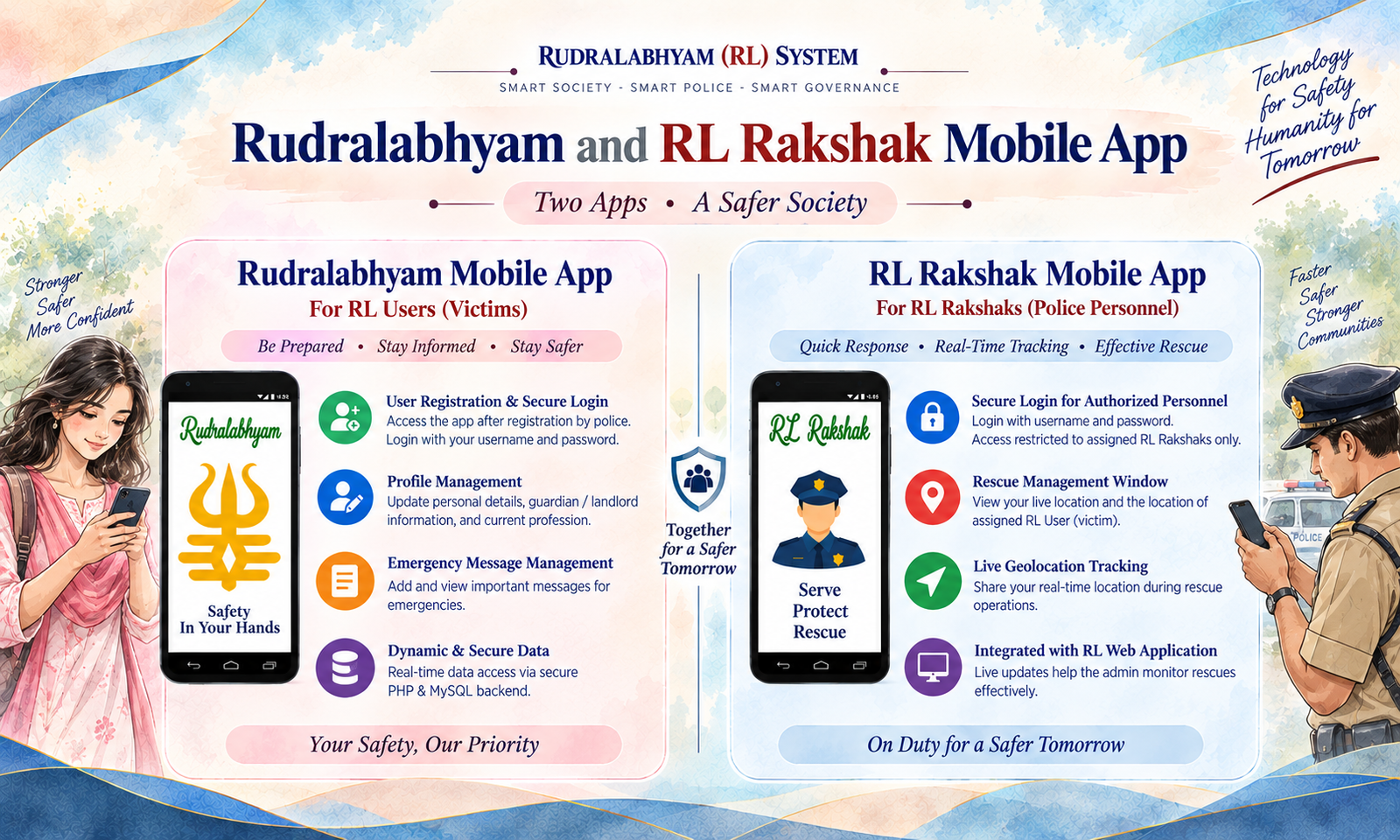
The mobile side of the RL System consists of two applications:
- The Rudralabhyam Mobile App, used by the registered women
- The RL Rakshak App, used by the police personnel assigned to a rescue operation.
Rudralabhyam App: A woman receiving an RL Device from the police administration creates her RL User profile through this application. The corresponding RL User ID must first be created by authorized police personnel through the RL Web Application.
The user can provide relevant information through the application. This includes emergency contact numbers and a history of threats or harassment. The user can record details concerning when she was threatened and whether the threat came from an individual or a group. Such information can provide useful background for police personnel and subsequent investigation.
RL Rakshak App: The RL Rakshak Mobile App is designed for the responding police officer. The application shares the officer's current geolocation with the server during a rescue operation, allowing the RL Web Application to display the positions of the victim and the responding officer within its rescue-management interface.
The RL Rakshak application also mirrors the RL Web Application's rescue-management window through which the assigned officer can view the victim's current status and use the available information to reach the reported location.
Development cost: Both the Rudralabhyam App and RL Rakshak App were developed using MIT App Inventor. According to the project documentation, this resulted in zero development cost for the prototype mobile applications.
Technology becomes meaningful when every component knows its role.
The RL System brings together a discreet user device, station-level hardware, a central web platform and dedicated mobile applications into one coordinated response framework. Each component performs a distinct function, but their real value lies in how they work together—from an early warning to a localized police response.
Explore the RL Web Application